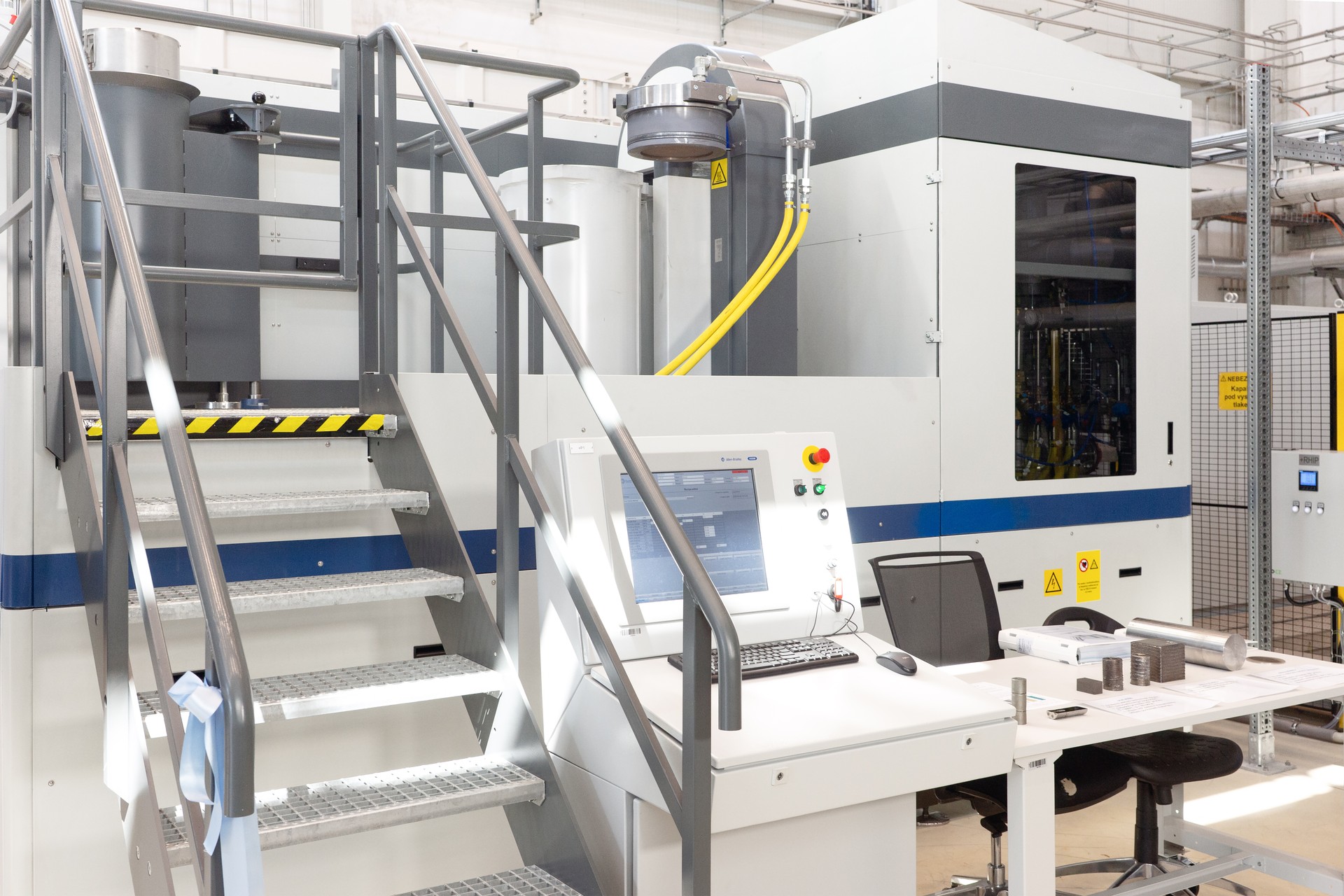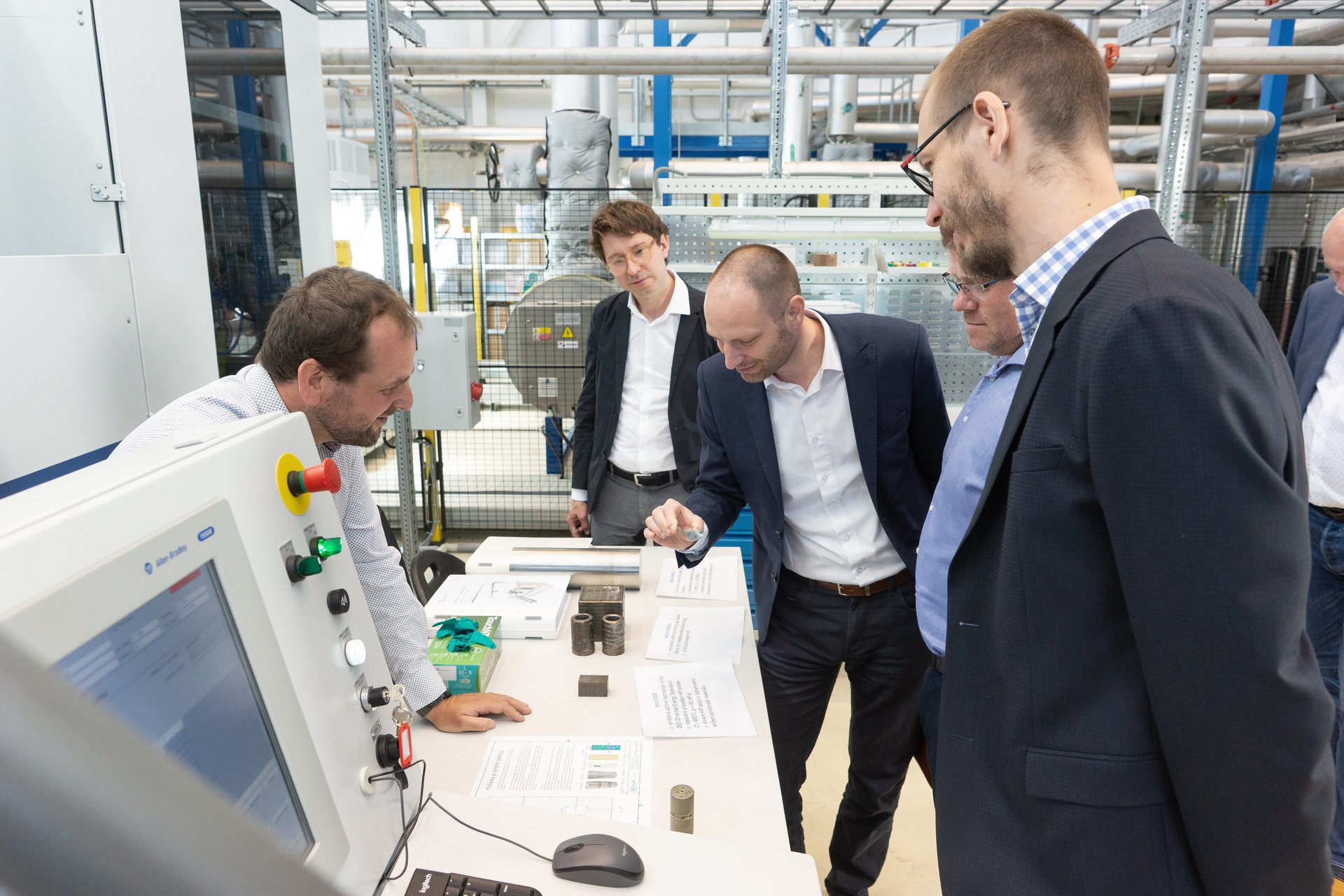


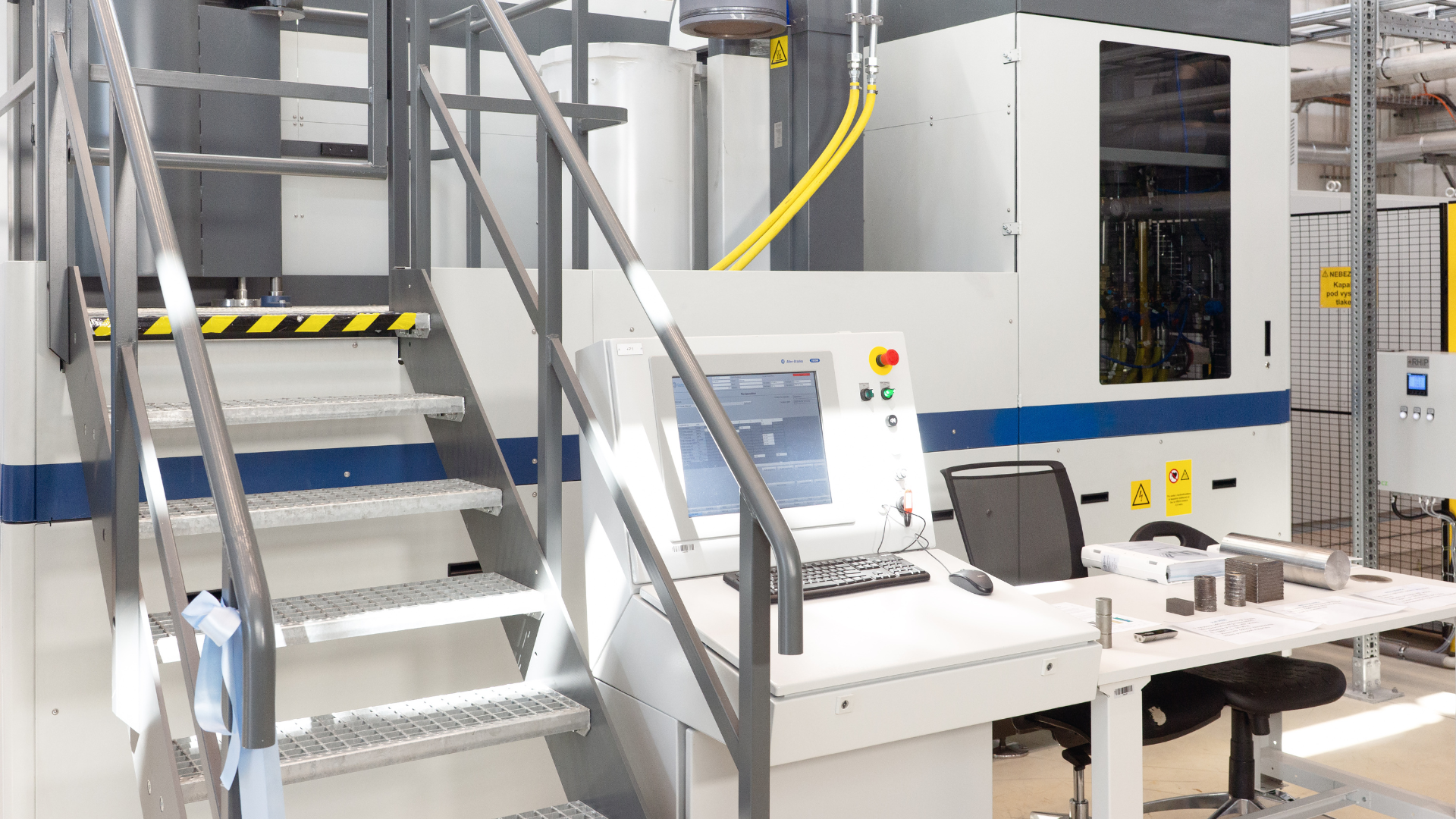
At the beginning of last year, our Pilsen laboratories expanded with a unique device that opens new possibilities in the research of modern materials. Hot isostatic pressing, known as HIP is a method that combines the effects of high temperature and pressure to change the internal structure of materials so that that they become stronger, more durable and reliable. Components made of such materials are used in energetics or for nuclear research purposes.
The newly installed unit is equipped with a molybdenum furnace that can process samples with a diameter of up to 210 millimetres and a height of 400 millimetres at temperatures reaching up to 1400 °C. During the process, the material is subjected to a pressure of up to 205 MPa – more than two thousand times atmospheric pressure. This extreme combination of temperature and pressure, developed in an inert argon atmosphere, allows the so-called diffusion processes and creep to be activated in the material.
To put it simply: in these conditions, pores and imperfections are closed, the chemical composition is homogenized, and the material structure is rearranged and strengthened. This results in significantly better mechanical properties, longer service life and higher corrosion resistance - key factors, for example, in the production of components for nuclear reactors or in the development of new alloys for extreme conditions.
A great advantage of the Pilsen facility is also its ability to cool quickly. Thanks to the so-called URQ mode, the temperature in the furnace can be changed very effectively, which allows the creation of specific "turbid" structures that can give the material other interesting properties. The facility is also environmentally friendly – it can regenerate and reuse most of the argon atmosphere, thereby reducing gas consumption and operating costs.
The new technology already plays an important role in research projects today. It is mainly involved in the outputs of the provided institutional support, in the TAČR project Théta 2, which focuses on the surface treatment of liquid fluoride fuel reactor components, or in the NCK II: CANUT II – Additive Repair Technology, where it helps to improve materials produced by 3D printing.
And the results? Although the unit was put into operation only recently, it has already brought interesting findings that our experts have presented at international conferences, and which are now undergoing peer review in professional journals.
In the coming years, the Pilsen HIP unit will play a key role in the development of new materials for small modular reactors, salt-cooled reactors and fusion applications. In other words – the technology that works in our laboratories today may soon help shape the material base of the energy sector in the future.