

Thermonuclear fusion is a nuclear reaction in which light nuclei combine to form a heavier one, releasing huge amounts of energy. Under the extreme pressures and temperatures found in the cores of stars, two light nuclei can overcome repulsive forces. The international experimental reactor ITER brings fusion down to Earth. Without the gravitational pressure found in the cores of stars, the fusion plasma must reach extreme temperatures of the order of 100 million Kelvin. The reactor walls will be exposed to enormous heat fluxes and therefore, their thermal properties must be properly tested. This is where the HELCZA facility, built at the Research Center Řež in Pilsen, comes in.
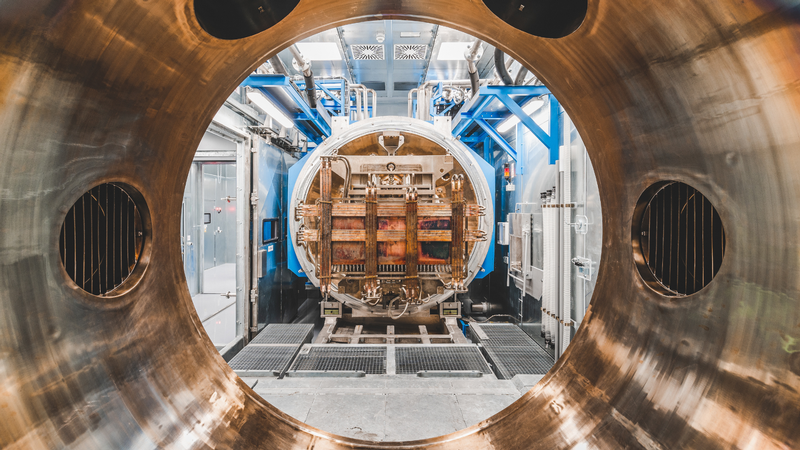
HELCZA (High Energy Load Czech Assembly) is a facility for cyclic testing of components with high heat fluxes. The facility was built primarily to test the plasma facing components (PFC) of the ITER reactor. Using an electron gun with maximum power of 800 kW, the reactor panels are heated with heat fluxes of up to 20 MW/m2, thus verifying their ability to remove heat from the fusion plasma. The entire test takes place in a robust stainless steel vacuum chamber where the tested samples are cooled with demineralized water under high pressure and temperature, just like they will be in the ITER reactor. The behaviour of the material during the test is monitored by a set of diagnostic devices: infrared cameras and pyrometers monitor the surface temperature, an X-ray camera for verification of heat-flux uniformity, a series of sensors for measuring temperature, pressure and flow of cooling water.
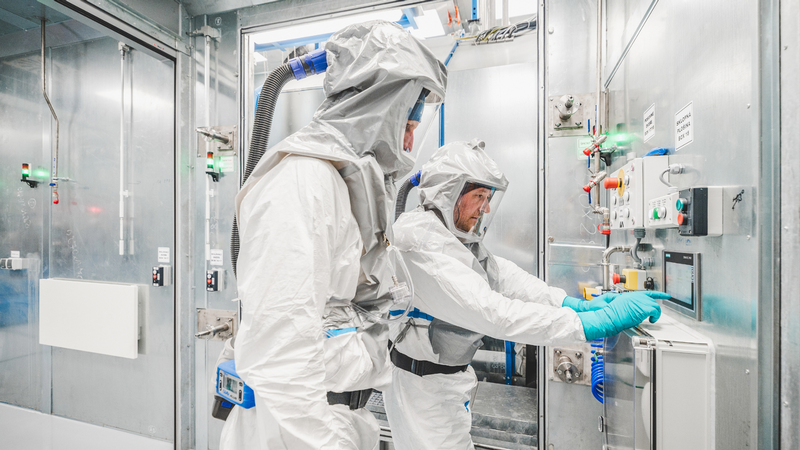
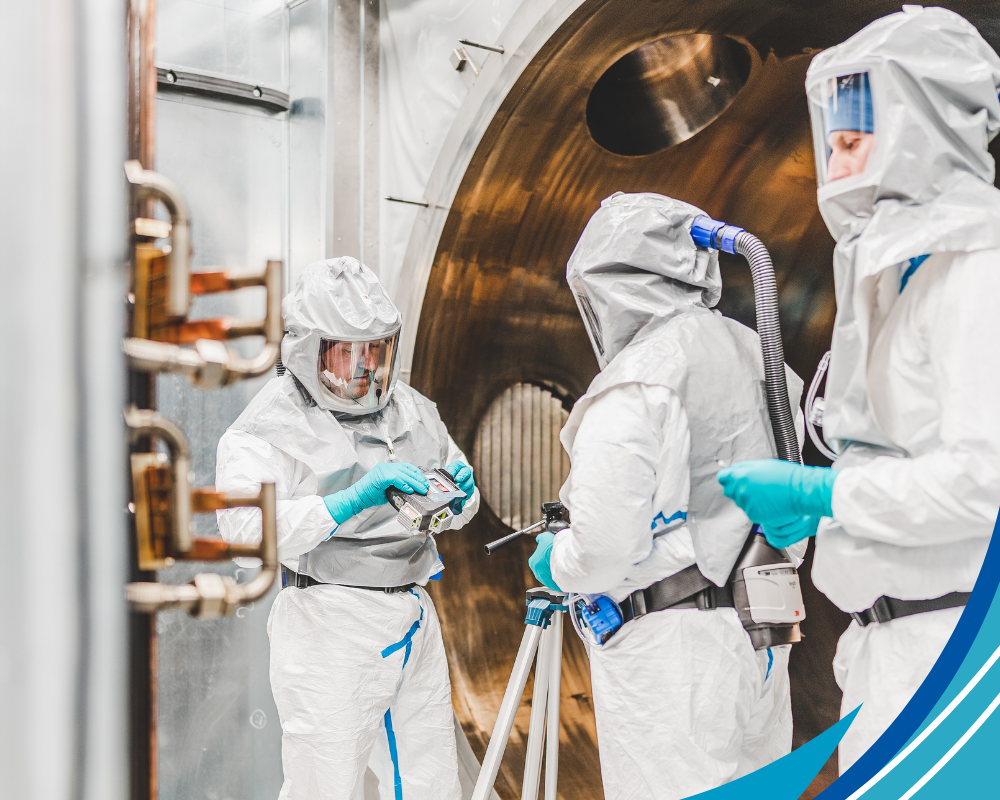
The first tests began in April 2021 on prototypes of the first-wall panels. At that time, the top layer of the panel was made of beryllium. Due to the health risk posed by beryllium, a complex laboratory was built with several interconnected rooms with a decontamination and air filtration system, which was designed to prevent the spread of beryllium and protect the health of workers.
In early 2024, the last panel containing beryllium was tested and the transition to divertor components made of tungsten was initiated. This change required extensive decontamination of the entire facility to prevent possible contamination of new samples by beryllium. This decontamination was completed within a few months, and testing of the tungsten panels began in early 2025.
HELCZA is one of the top facilities of its kind and is an important part of the effort to commission the largest fusion reactor. The tests carried out at our Pilsen site provide important information on whether the selected materials and components will withstand the extreme conditions of a fusion reactor.